How the calculator gets to its number
Two questions, in order. First: how much energy does this dog need just to keep the lights on — heart beating, lungs breathing, body temperature held steady? That part scales with size, but not in a flat way. A 60-pound dog isn't double the calorie need of a 30-pound dog. Bigger animals are more metabolically efficient at rest, so the per-pound rate drops as the dog gets bigger. The calculator handles that math for you.
Second: how much extra on top of that for actually living? That depends on three things — whether the dog is spayed or neutered (about 10–20 percent fewer calories than intact), life stage (puppies under four months need roughly three times resting; adults 60–80 percent on top of resting; seniors slightly less), and activity level. A couch dog and a working farm collie don't need the same bowl, and the calculator spreads those into a four-step ladder: low, moderate, active, working.
Honest caveat: even with all the right inputs, two dogs with identical numbers can have real-world calorie needs 30 to 50 percent apart. Metabolism, lean muscle, climate, and breed traits all push individuals off the median. The calculator is the right starting place. Body shape over four to six weeks is the feedback loop that tells you whether to nudge the bowl up or down.
What the bowl actually carries
The daily calorie number is half the answer. The bowl is what gets measured into the dish twice a day, and the gap between calories and bowl is where most dogs gain or lose weight without anyone noticing. Four layers, in order:
- The total daily calorie target. The single number on the result panel. This is what the dog should eat across all sources combined — bowl, treats, chews, dental sticks, peanut butter inside the Kong, the bit of cheese around pill time. Everything counts.
- The bowl portion in cups, AM and PM. Daily target divided by the food's calories per cup, split half in the morning and half at night. The calorie-density number on the bag matters: a 350-kcal-per-cup kibble and a 450-kcal-per-cup performance formula are 22 percent apart on the same bowl, and the feeding chart on neither will warn you.
- The treat budget — keep it to 10%. Vets cap treats and chews at about 10 percent of daily calories so the rest of the diet has room to be balanced. Past 10 percent and the day's nutrition starts looking thin in places that matter. The calculator pulls 10 percent off the daily target and shows the bowl-only number separately.
- The over-ideal warning. Set the body shape past 5 and a warning panel appears. That's because at body shape 6 or higher the dog is already heavier than ideal, and feeding maintenance calories will hold the wrong weight. The right starting point is calories sized to the target weight, not today's — see the dog ideal weight calculator for the target step.
One opinion worth keeping: the feeding chart on the bag is a calibration check, not a target. It's rarely body-shape aware, almost never neuter-aware, and the calorie density it assumes drifts between formulations of the same brand. Get your number from the dog, then check it against the chart — not the other way around.
A worked example: 60-pound neutered adult, moderate activity
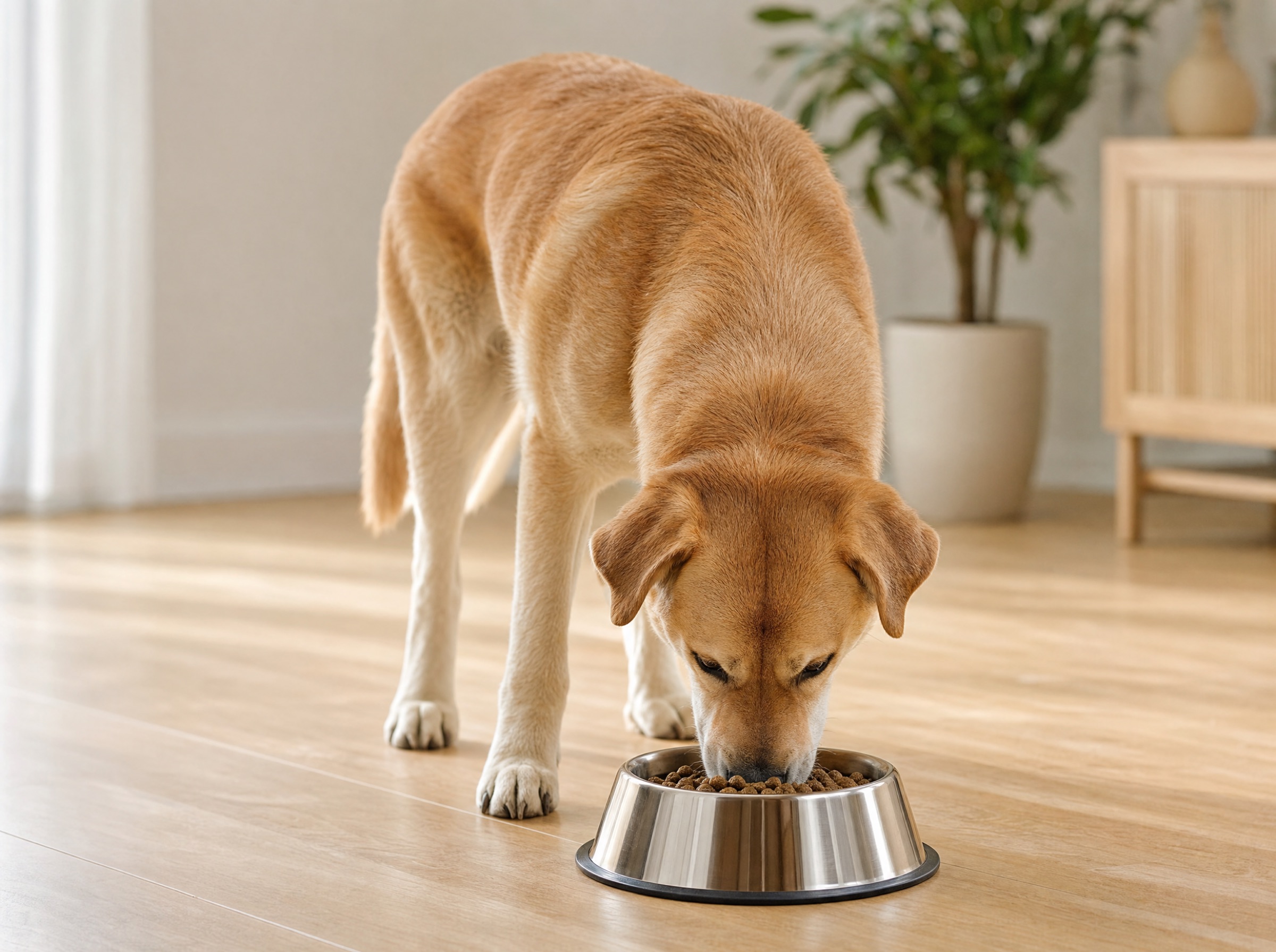
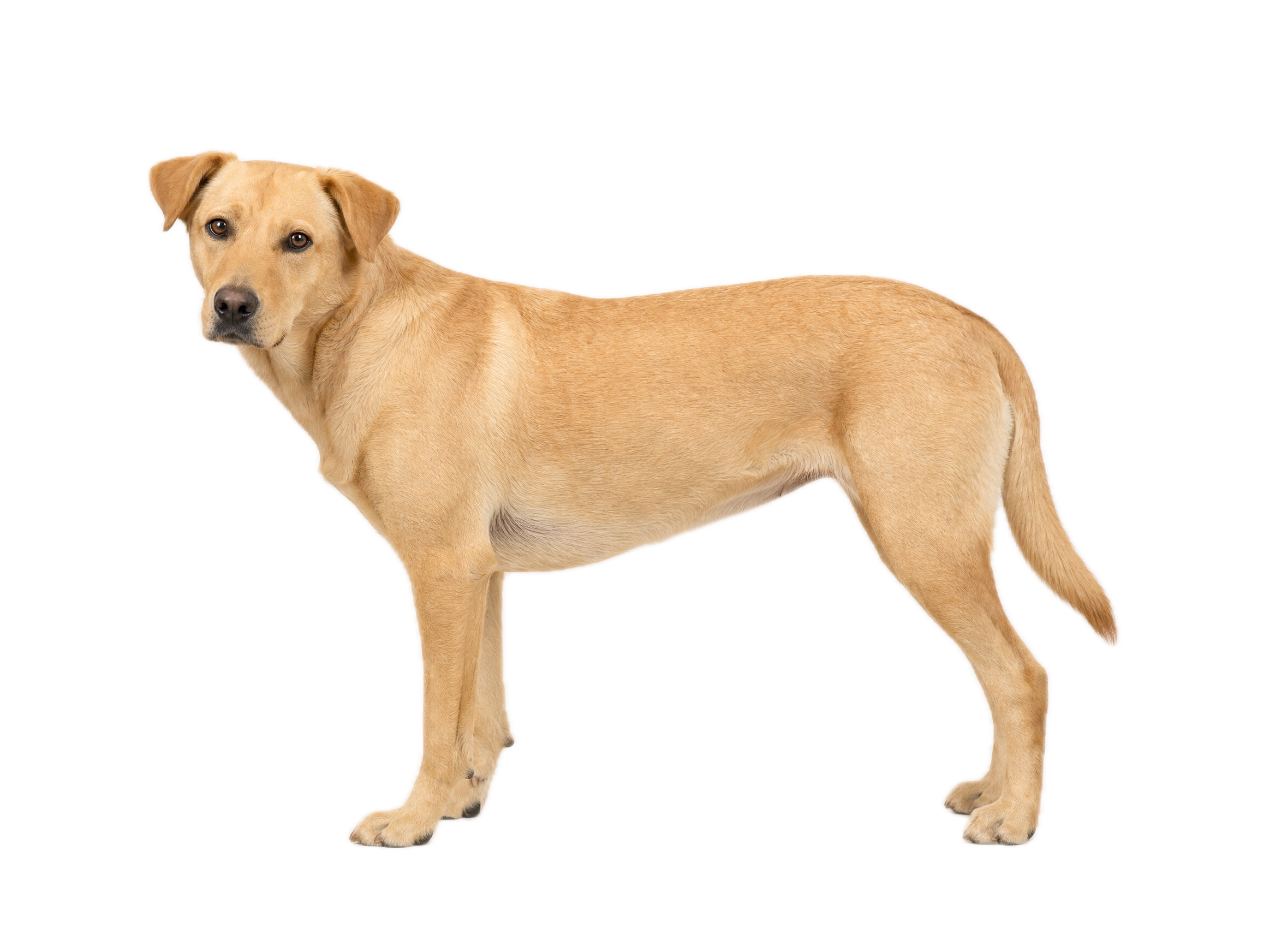
The defaults on the calculator above are this dog: 60 pounds, an ideal body shape (5 of 9), adult, spayed or neutered, moderate activity, and a food carrying 380 calories per cup. That's the typical setup for a healthy adult Lab, shepherd, or boxer-mix. Here's what the calculator does with it:
- Daily calorie target comes out around 1,335 calories. That's everything the dog should eat in a day, treats included.
- Bowl portion is roughly 3.5 cups of the 380-calorie kibble, split 1.75 cups in the morning and 1.75 at night.
- Treat budget is about 134 calories a day (10 percent of the total). That works out to one mid-size training treat plus a couple of berries — not three biscuits.
- Body shape check: 5 of 9 is the ideal middle. No warning panel, the bowl calorie target is the right plan. Set body shape to 6 or higher and the calculator points you at the ideal-weight tool instead, because the math changes for weight loss.
Move the same dog up to 70 pounds, no other input changed: target rises to about 1,500 calories. Move them down to 50 pounds: target drops to about 1,160. Same dog at body shape 7 (heavier than ideal): the calculator stops giving a maintenance number — that's a deficit calc, a different question, with a different starting weight.
Questions worth asking
How does the calculator know how many calories my dog needs?
It runs the published RER × MER formula from the veterinary nutrition references — the same starting math any vet would pull. Bigger dogs need proportionally fewer calories per pound than smaller dogs (a 60-pound dog isn't twice the calorie need of a 30-pound dog), so the formula isn't a flat per-pound rate — it accounts for body size first, then adjusts for life stage, whether the dog is spayed or neutered, and activity level. The full math lives at /methodology if you want to see it.
Why isn't the answer one exact number?
Because dogs vary. Two 60-pound neutered Labradors with the same activity level can have actual calorie needs 30 to 50 percent apart based on metabolism, lean muscle mass, climate, and breed-typical traits. The calculator is the starting point — feed it for four to six weeks and the dog's body shape tells you whether to nudge up or down. Bowl size is the lever; body condition over time is the feedback.
My dog's body shape says "over ideal" — can I just feed less?
Sort of, but the math is different. At a body shape of 6 or higher the dog is already heavier than the target, so feeding maintenance calories will hold the dog at the wrong weight. For weight loss, the calorie target gets sized to the dog's *target* weight, not today's weight. The dog ideal weight calculator finds the target; the dog calorie deficit calculator works out the safe daily amount.
What about treats? Do I really have to count them?
Yes. Treats and chews count toward the daily total — most owners forget the dental sticks, the pieces of cheese around pill time, the crusts off breakfast toast. Vets cap treats at about 10 percent of daily calories so the rest of the diet has room to actually be balanced. Past 10 percent and the math starts looking thin in places nutrition matters.
Why not just follow the feeding chart on the bag?
Bag charts are a useful sanity check, not a target. They aren't aware of your dog's body shape, they don't always factor in spay/neuter, and the calorie density they assume drifts between formulations in the same brand. The honest version: compute the calorie target from your dog, convert to cups using the actual kcal-per-cup number on this bag, and use the bag chart as one of several cross-checks. Body shape over time is the only one that's reliable.
Sources
The full verified-source working set with verbatim quotes lives at /methodology. Specific to this calculator:
- National Research Council. Nutrient Requirements of Dogs and Cats. National Academies Press, 2006. The RER equation and MER multiplier framework restate from this volume. nap.nationalacademies.org/catalog/10668
- Pet Nutrition Alliance. “Calculating Calories Based on Pet Needs.” Veterinary methodology document; canine MER multiplier table. petnutritionalliance.org PDF
- WSAVA Global Nutrition Committee. Body Condition Score chart (Dog), 9-point system. Treat-budget 10% guidance comes from the same body of WSAVA Global Nutrition guidance. wsava.org global-nutrition-guidelines
- AAFCO Dog Food Nutrient Profiles. The “complete and balanced” standard the 90% of-bowl complete diet has to meet. aafco.org/resources/publications
- Merck Veterinary Manual: Nutritional Requirements of Small Animals. Restates NRC 2006 RER and MER tables; useful as accessible secondary reference. merckvetmanual.com
Sister calculators plug into this same engine. The dog ideal weight calculator is live now — start there if your dog reads body condition 6 or higher. Calorie-deficit and wet/dry food-split calculators ship next in the same Phase 1 sequence.